modular
Rollalong's Havering modular homes feature in new council temporary accommodation toolkit
Modular manufacturer Rollalong says it contributed to a free Building Better guide on leasing relocatable temporary homes on meanwhile land, drawing on its 18-home scheme at Waterloo and Queen Street in Romford.
Dorset modular manufacturer Rollalong has said it contributed to a free toolkit launched by Building Better: Community of Practice to help councils lease relocatable temporary homes on land awaiting long-term development, with its 18-home Havering scheme among the case studies.
Rollalong said in a post dated 2 November 2026 that it is one of the modular housing partners featured in the Local Authority Toolkit for Relocatable Temporary Accommodation on Meanwhile Use Land. The company described the document as an end-to-end guide for local authorities using leasing models to deliver temporary homes.
According to Building Better, the toolkit builds on schemes already delivered in Bristol and Havering, is designed to complement permanent social rent homes rather than replace them, and aims to help councils work within constrained borrowing while avoiding long-term financial commitments.
Rollalong said the toolkit was developed through the Building Better Community of Practice with a consortium of industry experts, local authorities and housing specialists, and is free.
The Havering scheme
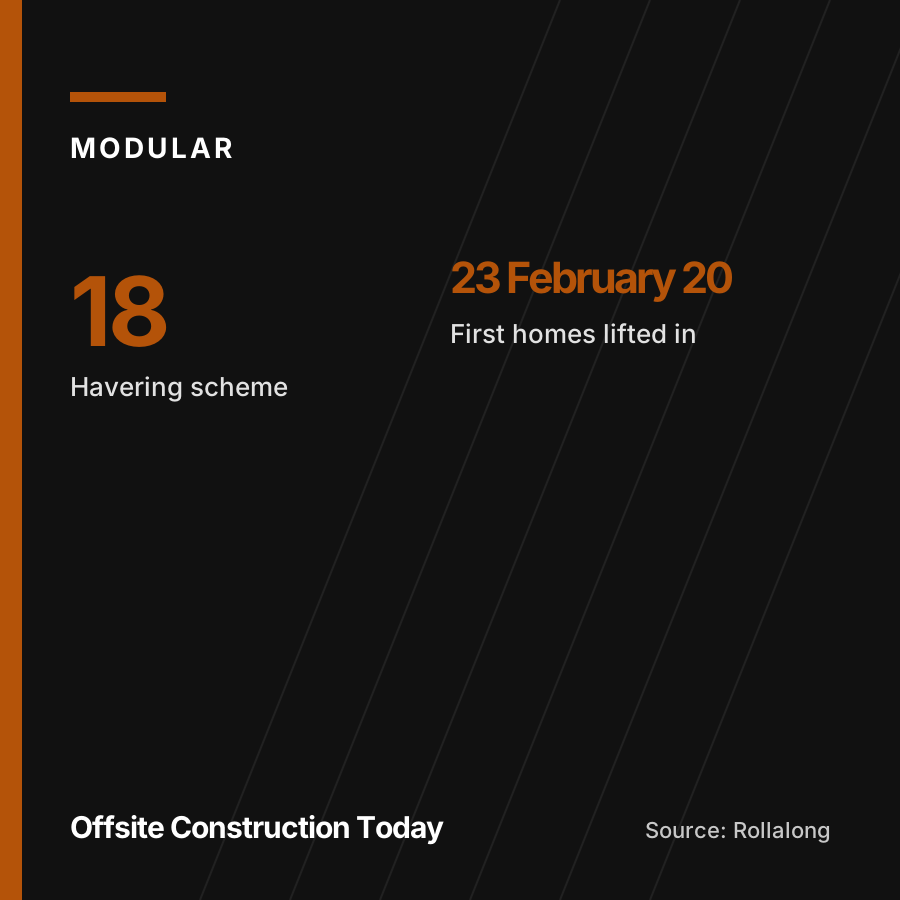
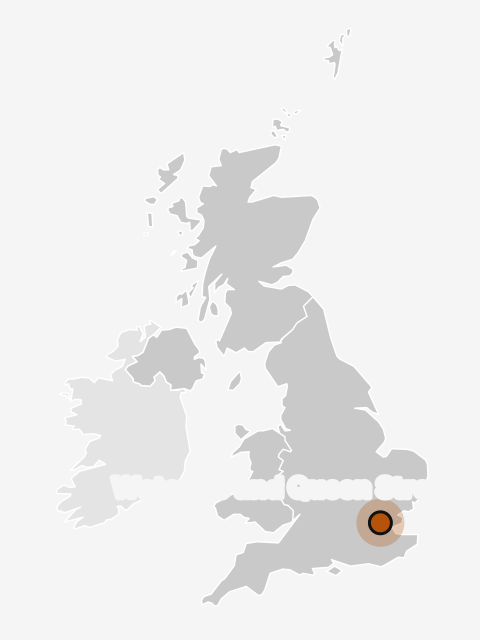
The Havering case study is a scheme of 18 modular homes at Waterloo and Queen Street in Romford, which Rollalong said it is delivering in partnership with Wates Residential and Havering Council. The homes sit on land earmarked for future regeneration and are designed to be relocated, the company said.
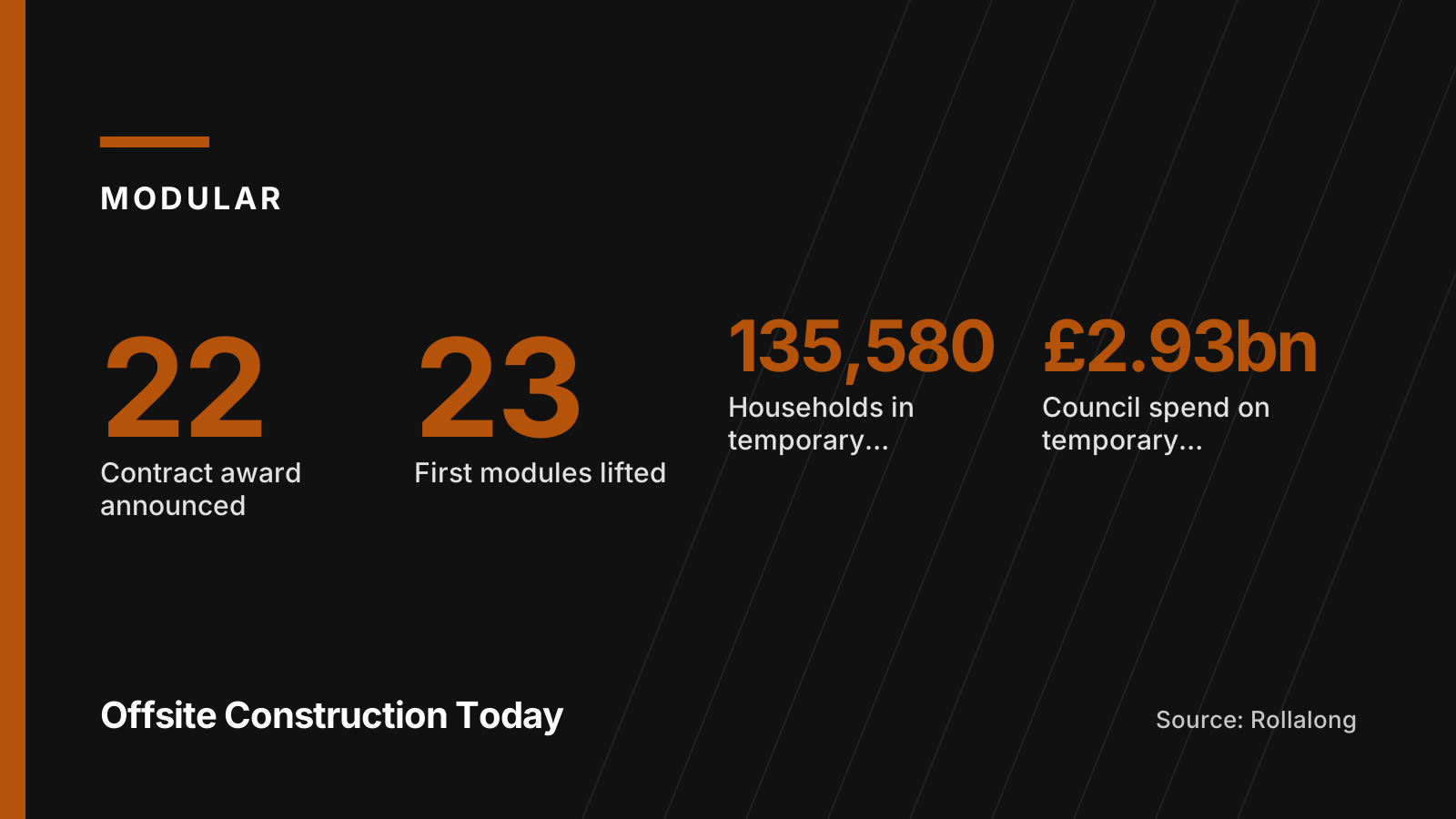
Havering Council announced on 22 October 2025 that Wates Residential and the council had awarded Rollalong the contract to supply the temporary modular homes. The council said the homes are designed to be easily relocated as what it called the Wates Residential and Havering Council 12 Estates regeneration develops; Rollalong's own project page refers to the site as part of Havering's 12 Sites Regeneration Programme.
Paul Jones, Director at Rollalong, said at the time of the award: "Our modular homes are not only quick to install, but also built to the highest standards of quality and sustainability."
The council said the first modular homes were lifted into place in the week of 23 February 2026. Rollalong's project page, dated 3 March 2026, names the London Borough of Havering as client, describes the scheme as 18 two and three bedroom meanwhile use homes, and says the development is now complete. The modules were built at the company's Dorset factory and transported to Romford, it said.
Councillor Ray Morgon, Leader of Havering Council, said as installation started: "This project will make a real difference to local families who need safe, temporary accommodation."
Paul Nicholls, Regional Managing Director for London at Wates, said at contract award that the homes would offer essential accommodation to vulnerable families in the borough.
Who is behind the toolkit
Housing Festival said on its own toolkit page that it and Places for People, with a consortium of contributing partners, were producing the guide, and that Bristol City Council and the London Borough of Havering had pioneered models delivering demountable homes on under-used land as purpose-built temporary accommodation on a meanwhile basis.
Housing Festival said the plan was to make the toolkit widely available by October 2026, free of charge and without a paywall, accessed through the Building Better Community of Practice members area. Rollalong's post announcing the launch is dated 2 November 2026.
The figures behind it
Building Better's toolkit page states that a record 135,580 households, including 177,530 children, are living in temporary accommodation in England, and that councils spent £2.93bn on temporary accommodation in 2025/26.
Official statistics from the Ministry of Housing, Communities and Local Government (MHCLG) put the number of households in temporary accommodation in England at 135,580 on 31 March 2026, up 1.1% on the previous quarter and 3.6% on a year earlier. MHCLG said the figure is a record high. The same data show 177,530 children in temporary accommodation on that date, up 5.2% on a year earlier.
MHCLG also reported that 12,220 households, or 9.0% of those in temporary accommodation, were in bed and breakfast accommodation on 31 March 2026, down 3.0 percentage points on a year earlier.
Rollalong said the long-term answer to the housing crisis is more permanent, genuinely affordable homes, citing an estimate that 90,000 additional social rent homes a year are needed for 15 years.
On the record: London Borough of Havering, Bristol City Council, Ministry of Housing, Communities and Local Government
Sources
- Rollalong (opens in a new tab) (accessed 2026-11-02)
- Building Better: Community of Practice (opens in a new tab) (accessed 2026-11-02)
- Housing Festival (opens in a new tab) (accessed 2026-11-02)
- Havering Council (opens in a new tab) (accessed 2026-11-02)
- Havering Council (opens in a new tab) (accessed 2026-11-02)
- Rollalong (opens in a new tab) (accessed 2026-11-02)
- Ministry of Housing, Communities and Local Government (GOV.UK) (opens in a new tab) (accessed 2026-11-02)
This story was researched from the primary sources above and checked against them before publication. Spotted an error? Tell us and we will correct it promptly.